
Past and present collide: Orli Shaham on rediscovering Beethoven
David Lewellen
PUBLISHED
Tagged Under: 2026.27 Season, Guest Artist, piano
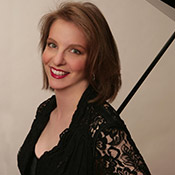
Orli Shaham will be playing Beethoven soon with the Milwaukee Symphony Orchestra. But a conversation with her quickly spills over into the interconnections of Beethoven, Brahms, both Schumanns, and her own marriage.
Shaham will perform Beethoven’s Piano Concerto No. 1 in Milwaukee, but she points out that although it is numbered the first of five, it was actually written second, and it “opens the form up and allows more development of ideas” than the 18th-century norms.
“It expanded how much you could extract out of a little material,” she said. “And that’s the problem that composers were dealing with afterward” — composers such as Robert Schumann (whose Symphony No. 3 makes up the second half of the program), and his wife, Clara, a noted pianist and composer in her own right and a special focus of Shaham’s interest.
“Beethoven is formative for both Schumanns,” she said. “The weight of Beethoven burdened all composers in the 19th century.” The solution to Beethoven’s formal inventiveness for many, she said, including the Schumanns, was to move away from set musical forms toward more freedom and abstract ideas.
Speaking of the concerto she will perform in Milwaukee, Shaham said, “I never have to try to find something new. I just keep finding it. I’ve been playing this concerto for 30 or 35 years, and every time I go back to it, I’m like, ‘This was there all along?’” It is an unusually positive piece for Beethoven, she said, “and not just because it’s C major. The first movement is joy, and the third movement is a lot of rhythm and free dance and playfulness. And the second movement is like an operatic scene. A lot of Beethoven’s second movements are about drama or sadness, but this one is about beauty.”
Shaham has never worked before with guest conductor Kristiina Poska, “but I’ve heard wonderful things about her.” When they get together before the first rehearsal, “I’ll want to convey the overarching themes I’m thinking of. These used to be called tempo meetings, and they still are, but there’s so much more. It can set the stage for what I hope we achieve.”
What cadenza will she use in the first movement? Shaham’s laugh speaks volumes. “I’m still debating how I want to cut it up,” she said, choosing passages from the ones meant for Beethoven’s first and third concertos. “It’s all there, but there’s not a single one that has ideal pacing. I’ve changed it up over the years.”
Shaham will miss seeing her husband, conductor David Robertson, by a day or two; he conducted the MSO the weekend of October 23-25. “We thought that was hilarious, when we compared our schedules,” she said.
Robertson, who is also a composer, wrote a concerto for her during the pandemic. “I think we’ve played 30 different concertos together, and he drew inspiration from all of them,” she said. And it helps her feel connected to the Schumanns, since Robert wrote nearly all of his piano music for Clara to play — and like Clara, she asked her husband to expand a certain spot in the concerto.
Clara’s career “defied being a woman at that time,” she said. Robert banned her from performing for a year after their marriage, but when they had no money coming in, she resumed her career, “defying 19th-century expectations.”
Shaham has studied the letters that Clara Schumann wrote while traveling, and it reminds her of her own life: “She’s talking about the job of finding a good piano to practice on, which is still something that concerns every pianist, and then she’s saying, ‘make sure that this son eats that kind of food.’”
Although she has little time to do her own research in archives, she said, “What I’m doing wouldn’t be possible without my history and musicology background.” She planned a career as a concert pianist from a young age, but she majored in history as an undergraduate. Concentrating on the period from the French Revolution forward, she realized that that era largely coincides with the music she performs. “It’s wonderful background and context,” she said. “Thirty years out, I find I use it even more.”