Tenor Robert Paddock Shares Meaningful Music with the Milwaukee Symphony Chorus
PUBLISHED
Tagged Under: Chorus, MSO Notable
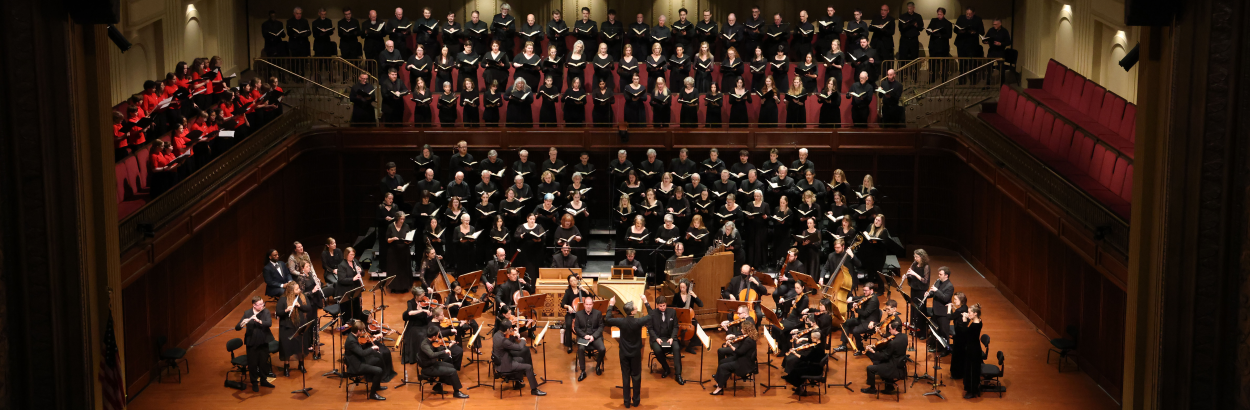
As the 50th anniversary season of the Milwaukee Symphony Chorus concludes, we spoke with tenor Robert Paddock to learn about his long tenure with the chorus, his memories of the ensemble over the years, and his hopes for the music to come.
 What are your reflections on the close of this 50th anniversary season of the Milwaukee Symphony Chorus?
I sang in choruses from elementary school through university but never dreamed of performing in a professional setting. From the beginning and right up to this season, it is always an amazing and sobering feeling to perform this music in Allen-Bradley Hall.
There have been too many meaningful experiences to count in my years with the chorus. Performances at other major halls stand out, of course, including performing Mahler’s Symphony No. 2 at Orchestra Hall in Chicago, Prokofiev’s Alexander Nevsky in Carnegie Hall, and Mahler’s Symphony No. 8 at Ravinia. There are my first performances in Milwaukee that I will always remember, including Beethoven’s 9th and the Mozart Requiem. Then there are the ones that I will never forget: The Flying Dutchman with Edo de Waart, Lehrstücke with Lukas Foss, and A Survivor from Warsaw with Kenneth Schermerhorn.
In addition to representing the choral face of the Milwaukee Symphony Orchestra in major music settings, the camaraderie of the chorus traveling and performing in new locations is something I will always remember. From the beginning, the chorus was like a large family, sharing the labor of rehearsals and the excitement of performances.
What keeps me coming back? The music. There are so many great orchestral and choral compositions that we have done, will do again, or will do for the first time. Being able to contribute to these performances and experience the music is a reward in itself.
Why do you feel that support for the performing arts is important? How has the MSC been meaningful to both you and our Milwaukee community at large?
That’s easy. There are a lot of good classical choral pieces out there that you may never hear if you don’t have a good chorus.
I look at this in two ways: having a chorus of our caliber in Milwaukee gives the orchestra the ability to program important classical music that would otherwise not be performed: the masses, requiems, and passions by Bach, Brahms, or Mozart, or the choral symphonies of Beethoven, Mahler, and Vaughan Williams, just to name the most famous. All those big, grand pieces written three, four hundred years ago still fly. They still hit you in the heart.
On the other hand, there are also the lesser-known and newer compositions that need to be presented, and having a chorus that can perform at the level needed for the MSO makes that possible.
There are many members of the chorus with music education or performance education backgrounds, but there are also many who just want to sing in a quality ensemble. I joined the ensemble because the chorus manager, Joan Lounsbery, lived next door and recommended I try out. I don’t know if I would have joined if I had just seen a concert; I never thought I would be good enough to sing with an essentially professional group.
I remember talking with another former colleague who went into music management because she loved music but would never be a performer. Through this work, she could still be part of the community and contribute. I’m just glad I’ve been able to do this all these years.
The 2026-27 season will present more masterworks of the choral repertoire, including Mozart’s Requiem and Walton’s Belshazzar’s Feast. What will be noteworthy or challenging in the coming season? What are you most looking forward to?
Mozart’s Requiem is a masterpiece that people know, so it needs to be done well. Belshazzar’s Feast is fun and challenging with a lot of unusual rhythms and harmonies. But when done well, the audience will really enjoy it and it will be exciting to perform.
With Cheryl Frazes-Hill’s guidance, we’ve stepped up our skills and performance levels, which makes rehearsals even more challenging but the performances more rewarding. We’re performing pieces now much better than we ever have. That’s the fun of this.
For the future, if we keep up this level of professionalism and enthusiasm, we will only continue to improve. I look forward to years with continued great repertoire and opportunities to perform outside of Milwaukee.
 What message would you like to share with our donors and audience members about how their support of any kind — whether through financial donations or simply coming to experience a performance — impacts the success of the chorus and its future?
Whatever support donors can provide to the orchestra helps the chorus. Having a well-funded, secure orchestra makes the work of rehearsals more meaningful and the performances more rewarding; it helps to recruit and retain chorus members. In turn, this results in a better ensemble for the orchestra.
This season has been one of the biggest and best. We know that the quality of the MSO will always bring in an audience. We always hope that when we sing, the house will be full.
It’s important to get these pieces out to the public. People’s lives can be filled with so much worry, but I sit in rehearsals and I’m just amazed that someone was able to put all these notes down on paper and come up with whatever it is we’re singing. I get choked up during pieces like Missa solemnis, not just because the music is so good, but because I realize that the audience is experiencing it with me. It grounds you to know there’s something more beautiful out there. These pieces get you above and beyond your daily life.
And I want as many people as possible to hear these great performances of wonderful music.