
From Prodigy to Professional: Kerson Leong on Making Music that Matters
David Lewellen
PUBLISHED
Tagged Under: 2025.26 Season, Classics, Guest Artist, Violin
Going from child prodigy to international soloist as an adult required a significant internal journey for Kerson Leong.
Leong, 28, will perform the Beethoven violin concerto with the Milwaukee Symphony Orchestra on Jan. 23-24. But he has been in the spotlight since age 13, when he won the Yehudi Menuhin International Competition in Oslo.
“That was an eye-opening experience in many ways,” Leong said recently by phone. “It was a positive atmosphere, festive, not toxic, which does happen sometimes. And it put me on the path.”
But continuing his studies as a teenager after that early success at 13, he realized that “we grow up and we’re expected to be serious musicians. It’s a risky process. You have to overcome self-consciousness and grow up quickly. All of that tempered me somehow.”
Leong concluded that he had to keep performing for his own sense of self. “I had to make music for my own personal catharsis,” he said, “but hopefully I’m also sharing something with the audience. You have to see yourself in those notes, your own life, and develop your own emotional language, but only you know what that means. You’re revealing all of your secrets, but without words.”
The audience will not have the same response or meaning from the piece that Leong does, but that isn’t necessary. “They can take the sound and relate it to their own life,” he said. “When I see shining eyes or people crying, I know that it means something real.”
And, like any other job, Leong learned by doing. “The most important education comes from the field,” he said, “playing concertos and interacting with other musicians.”
While leading the life of a touring soloist, Leong remains curious about other disciplines and their intersections. His father, a physicist, explained the vibrations of strings to him as a child, and those insights have helped to form his technique over the years. “It’s a very small instrument, and it doesn’t take a lot of force,” he said. “Holding the bow, you can let the weight of your arm do the work for you.” Paying attention to the fluidity of his body also helps avoid performance-related injuries.
Those are insights that he shares with students in master classes, but he added, “Teaching is a feedback loop. You learn as much as you’re sharing.” For all the talk about technique and interpretation, he said, “the main thing is how the sound is coming out” — and that relates to the physicality of playing.
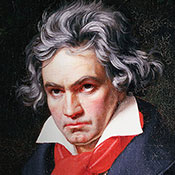
Talking about the Beethoven concerto, one of the monuments of the repertoire, Leong said, “The first word is ‘raw.’ It’s a lot distilled into something simple.” The soloist spends significant time in a supporting role to the orchestra, he said, and “how do you squeeze meaning and substance out of scales and arpeggios?” In those passages, his job is to highlight “how heartfelt and visceral and concentrated the material is in the orchestra.” He added, “Every part has an equal part to play. It’s like chamber music — you have to communicate with others and see what other things people have to offer.”
There are many different ways to play the piece, he said, partly because of Beethoven’s position as a bridge between the Classical and Romantic eras. But the upcoming Milwaukee performances, paired with a Haydn symphony and conducted by 18th-century specialist Bernard Labadie, will probably lean Classical. The soloist and conductor have worked together before, and Leong praised Labadie’s insight and historic perspective. But, he added, in rehearsal “it’s always important to leave yourself open.”