How Thiago Tiberio “Builds” A Live Film Score
David Lewellen
PUBLISHED
Tagged Under: 2026.27 Season, Conversations with Composers, Film with orchestra, Guest Artist
When Thiago Tiberio talks about preparing a movie for live orchestral performance, the verb he uses is “build.”
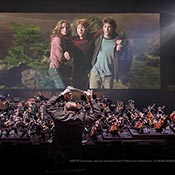
Tiberio built the live version of Dr. Seuss’ How the Grinch Stole Christmas, which he will conduct with the Milwaukee Symphony Orchestra over Thanksgiving weekend. After doing a dozen similar productions, he knows the work goes far beyond simple arranging.
“There’s four or five different companies involved, and you have to negotiate with them,” he said. “There’s video and audio editing. Sometimes you add material, so the musicians aren’t sitting for 20 minutes. You have to engrave the score and print it. You have to create a click track and a video version for the conductor. Every single asset.”
And Tiberio may be uniquely suited to such a role, given his variegated assortment of skills. He built his first computer at age 10, double majored in music and business as an undergraduate, and at various times has worked as an auditor and an IT consultant. The result for the past 10 years or so, he said, is that “I’m the person who takes film and creates a live performance with synchronization, because I’m at home in both worlds.”
Live movie soundtracks have to be arranged for performance by the normal instrumentation of a symphony orchestra, which is already a change from what usually happens in the recording studio. In that setting, “you might have 12 horns, and it’s hard to get even six onstage,” Tiberio said. “The strings will sometimes split into three or four parts in the studio. For Paddington, every viola had its own part. You have to be very flexible to cover all those parts.”
Despite the simplifications, he said, “the end goal is to sound like the original.” When he built the horror movie Get Out for orchestra performance, he had to find a way for orchestral instruments to duplicate the sounds of a synthesizer — and hiring a synthesizer for the live show was not a practical option, since the composer had not saved his original settings.
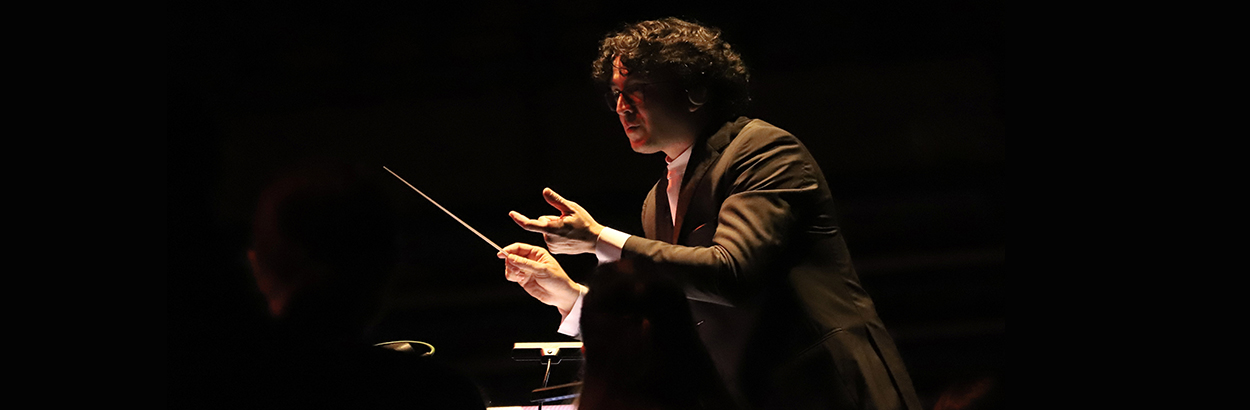
Tiberio has conducted many studio recordings for original movie soundtracks, where he has the luxury of stopping and going back if something goes wrong. In live performance, “if things happen, you have to be ready to line it back up again,” he said. “But orchestras are so intelligent. If something happens, they will look at me and figure it out.”
Synchronizing the live music to the pre-existing sequence of images is vital, but Tiberio says there sometimes is a little bit of latitude. In every performance, he said, “I have to decide as an artist, where are the important synchronization points and where do I find the freedom to make better music?” The click track — a prerecorded beat that performers hear through headphones — is always an option, but Tiberio tends to use it only for very complicated passages. The Milwaukee performances of the Grinch, he said, will not use one — partly because he is thoroughly familiar with it, having built the show.
Even when Tiberio is conducting a live performance of a movie whose original track he laid down in the studio, he feels free to make slight changes. “There’s always the spur of the moment, what am I feeling today,” he said. “It’s how you feel, how the orchestra feels, what it sounds like. It’s all flexible.”
As live film soundtracks have become more popular, they may become their own genre. “To me, it’s a concert,” Tiberio said. “If the film breaks, we can play the music and the people can imagine. Don’t minimize what the audience brings. Most people who attend already know the movie.”
He also said that live performances are helping to bring new prominence to previously little-known composers; he has prepared a concert of music by the Italian composer Enrico Morricone, who is less well-known in the United States.
“I feel astounded that we can do this to begin with,” he said, reflecting on all the moving parts that it takes to bring a movie to live performance. “When everything comes together, the music and the images of a film — I hope the audience shares that sense of awe.”